arly results from a small clinical trial at Changi General Hospital suggest the technique could lead to improvements in memory, mood and cognition.
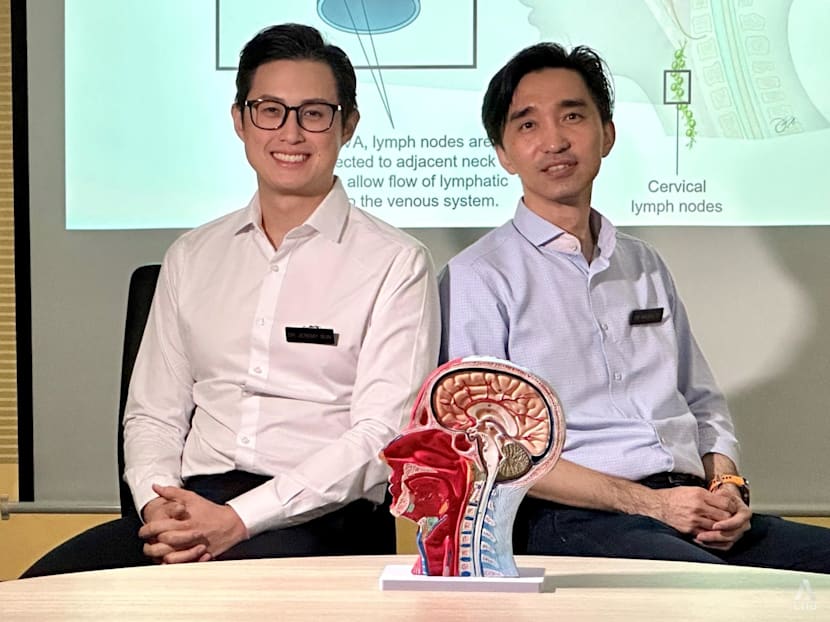
A surgical procedure – commonly used to treat lymphoedema, or painful fluid accumulation in the limbs – is being explored as the next form of treatment for Alzheimer’s disease right here in Singapore, announced Changi General Hospital (CGH) on Tuesday (Apr 7).
The two-year trial, known as Cervical Lymphatico-Venous Bypass for Alzheimer’s Disease (CLyVeB-AD-1), is being conducted on four patients at CGH.
The procedure taps on the body’s lymphatic system, a waste-clearance pathway that uses the brain’s fluid to “wash” away metabolic waste such as Alzheimer’s disease-causing proteins, particularly during deep sleep.
“The lymphatic system basically helps to collect and drain fluid high in protein from the body back into the blood circulatory system,” explained Clinical Assistant Professor Vincent Tay, a consultant with CGH’s Plastic, Reconstructive & Aesthetic Surgery Service, Department of Surgery. He is also the principal investigator of the CLyVeB-AD-1 trial.
Using a microsurgical technique known as lymphaticovenous anastomosis (LVA), lymphatic structures such as lymph nodes on each side of the neck are connected to adjacent veins to improve clearance for the protein-carrying brain fluid.
“The surgical principles are similar – creating bypass pathways for fluid drainage. By connecting neck lymphatic structures to veins to enhance the brain’s natural waste clearance system, we can potentially help clear the toxic proteins that accumulate in Alzheimer’s disease,” said Clinical Assistant Professor Jeremy Sun, the head and a senior consultant with CGH’s Plastic, Reconstructive & Aesthetic Surgery Service, Department of Surgery.
The multidisciplinary team participating in the CLyVeB-AD-1 trial travelled to Hangzhou, China, where LVA was first used in the treatment of Alzheimer’s disease, to learn about the technique in 2024.
The team then obtained approval from the Institutional Review Board, and is prospectively registered on clinicaltrials.gov. The CLyVeB-AD-1 trial is the first regulated clinical trial of its kind in Singapore and Southeast Asia.
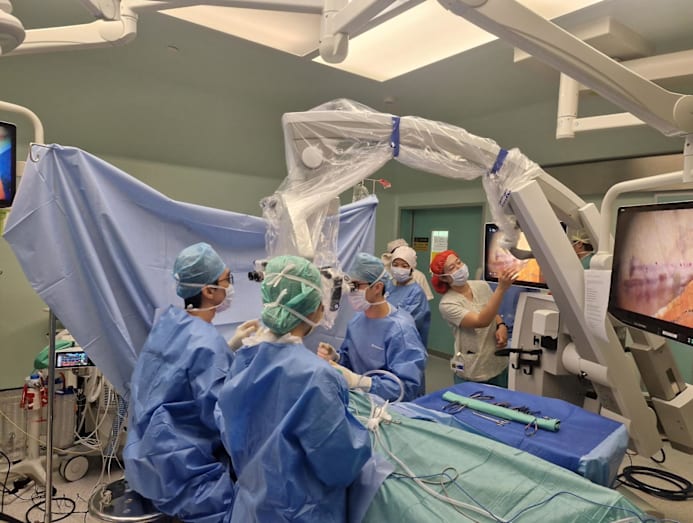
To date, four undisclosed patients with mild to moderate Alzheimer’s disease, and ranging from ages 61 to 73, have undergone the procedure. They have been monitored since undergoing the procedure in January 2025.
Post-surgery, improvements in key issues such as memory loss, cognitive dysfunction and behavioural disturbances have been reported, the doctors said.
Brain scans have also shown steady improvements at the six-month point, which could signal stability, they added.
“One patient who had long-standing depression and anxiety seemed to be less anxious and had improved mood after the surgery,” said Adjunct Associate Professor Lim Si Ching, a senior consultant with CGH’s Department of Geriatric Medicine.
“Another patient who had challenges with language became more interactive and communicated better after the surgery.”
An estimated 100,000 individuals live with dementia in Singapore and about 70 per cent of them have Alzheimer’s disease, the most common type of dementia.
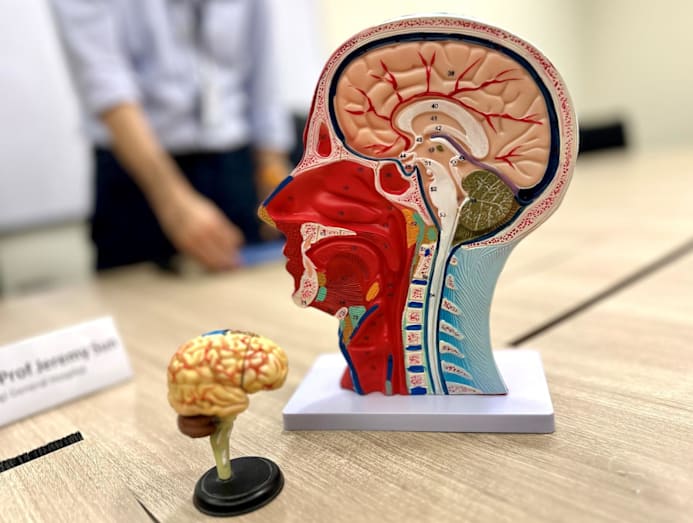
“Current medical treatments can only slow disease progression to a certain extent, which is why CGH wanted to explore innovative treatment approaches,” said Clin Asst Prof Tay.
For instance, the latest approved medication for Alzheimer’s disease, monoclonal antibodies, have been proven to slow down the disease’s progression in global landmark trials by targeting the proteins, said Clin Asst Prof Tay. However, there are side effects and patients have to be monitored every six months with brain scans, he said.
Older medications do not change the progression of the disease, added Clin Asst Prof Sun, but they help to lessen the symptoms.
“But the moment you stop the medication, the patient reverts to where he is at the stage of the disease.”
Source: CNA


