Once a destination for the ultra-rich, the Maldives is now embracing a more local, sustainable model of tourism that’s changing who gets to experience paradise.
The air smelled faintly of watermelons and salt as our ferry pulled into the island of Thoddoo, and the soundtrack was the putter of motorbikes, not the thrum of seaplanes. Twelve years ago, when I last visited while filming an episode of BBC’s The Travel Show, the Maldives was still a postcard fantasy of overwater villas, private islands and prices that kept most travellers at bay. Now, families were stepping off public boats with backpacks instead of bellboys unloading Louis Vuitton trunks. This wasn’t the Maldives I remembered – and that was exactly the point.
Over the past decade, a quiet revolution has unfolded across the atolls. Government reforms have allowed Maldivians to open guesthouses on inhabited islands, breaking a long-standing rule that once confined tourism to unpopulated resort enclaves. The result has been transformative: more than 1,200 guesthouses now operate across 90 local islands, according to the Maldives’ Ministry of Tourism. Travellers can experience the country’s everyday culture, and, for the first time, local families can earn directly from the industry that powers their economy.
On my recent visit with my three children, I wanted to see what this shift looked like in practice. Our trip took us from the home-cooked hospitality of Thoddoo, often called the “farm island” of the Maldives, to a mid-range resort that’s redefining what sustainable luxury can mean. Together, they tell a story of a country broadening its welcome and quietly reshaping what paradise looks like.
Life on a local island
Stepping onto Thoddoo in the North Ari Atoll felt worlds away from the manicured perfection of resort life, much of which is found near the capital, Malé, in the North Malé Atoll. The public speedboat from Malé took 90 minutes and cost far less than a typical luxe resort seaplane. On arrival, we immediately noticed that the island’s pace was immediately different – no cars, just bicycles and the occasional electric buggy buzzing between palm-lined, sandy lanes. Rows of papaya trees and watermelon fields stretched inland, ringed by the Maldives’ iconic turquoise seas.
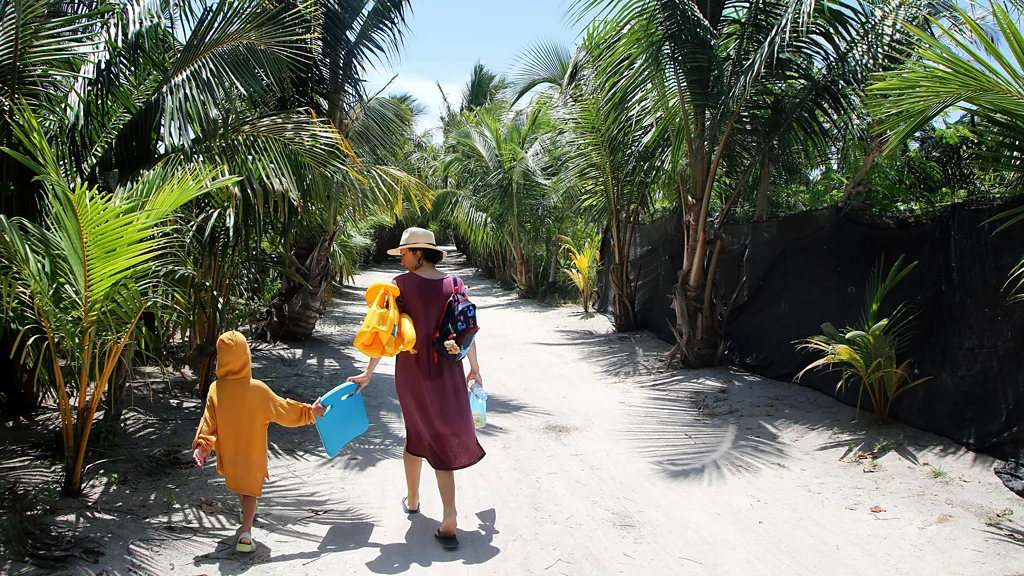
We stayed at the island’s first guesthouse, Serene Sky, owned by Ahmed Karam, president of the Guesthouse Association of the Maldives and a leading voice in the country’s fast-growing local-island tourism movement. Serene Sky was simple and spotless. The pillows weren’t designer, the bathroom was modest, but the welcome was genuine, and the meals were home cooking at its best – fried reef fish caught just hours earlier, curried pumpkin from the farms nearby and the freshest watermelon juice imaginable.
Karam told me this new wave of community-led tourism has reshaped the landscape here. “Locals now benefit directly from tourism dollars,” he said, “but it’s also made us more aware of how much we need to protect what we have – the island, the reefs, the wildlife. That’s what people come here to see.”
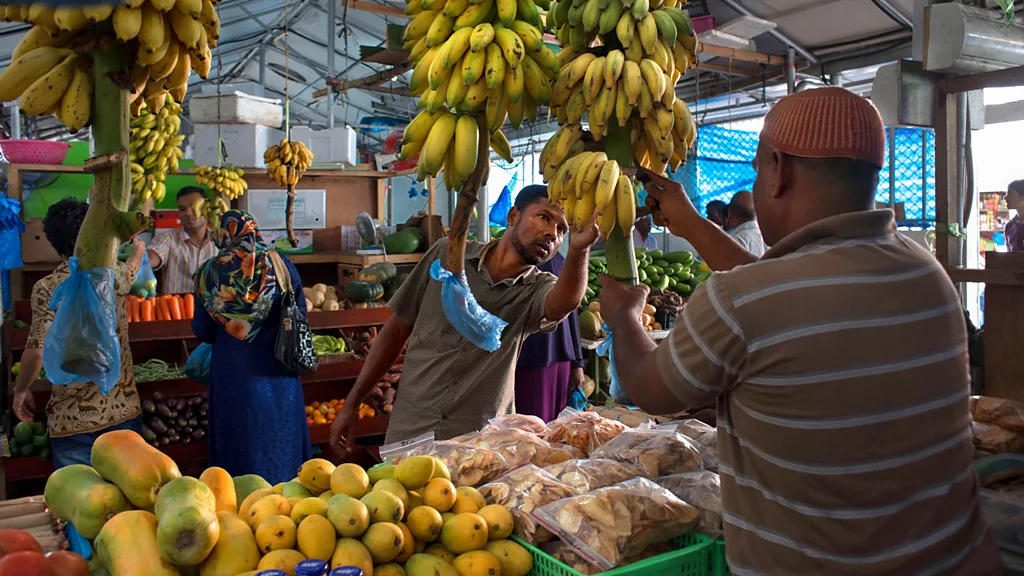
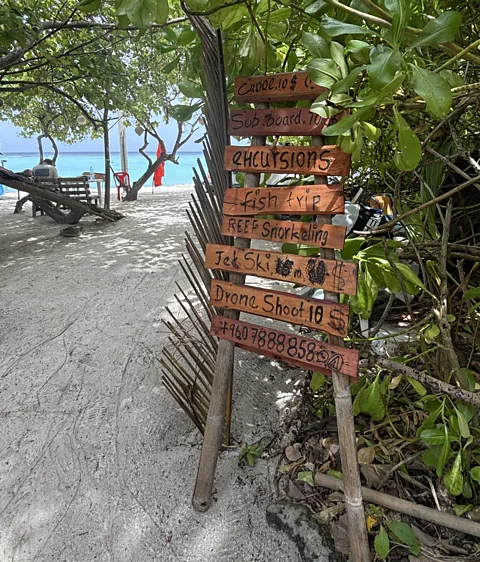
My children loved the island’s freedom. We snorkelled on the nearby reef with locals, experiencing our first magical encounter with sea turtles. Afterwards, we relaxed on one of the island’s designated “bikini beaches”, small stretches set aside for visitors to swim and sunbathe in Western swimwear. As the Maldives is a predominantly Muslim nation, modest dress is expected elsewhere.
Plan your trip:
Mix your stay: Split your trip between a local guesthouse and a resort to experience both culture and comfort.
Transfers: Public speedboats to islands like Thoddoo cost $30-70 (£23-53) per person one way. Book ahead in peak season.
Pack wisely: Reef-safe sunscreen, snorkel gear and reef shoes earn their space in your bag.
Respect local customs: Use designated bikini beaches and dress modestly in villages; alcohol is prohibited on local islands.
Choose trusted operators: Book with dive and tour companies committed to reef-friendly practices.
Price guide: Guesthouses from $50-60 (£38-45) per night; mid-range resorts like Sun Siyam Olhuveli from $499+ (£380); ultra-luxury stays from $1,000+ (£760).
We met Andy Anis, a local farmer, who invited us to his farm and sliced open a golden-fleshed watermelon in the middle of his field for us to try, juice running down our wrists in the heat. Later, at Anis’ tiny juice bar, we slurped coconut ice cream and watched the island settle into evening.
Sustainable luxury in the Maldives
The second leg of our journey was a world apart: Sun Siyam Olhuveli, a family-friendly, Maldivian-owned resort in the South Malé Atoll. The welcome was warm and theatrical – drums on the jetty, cold towels, smiling staff – but what struck me was the ease. Our ever-cheerful resort representative, Raail, handled everything via WhatsApp, from snorkel gear to kids’ medicine.
We upgraded to a two-bedroom beachfront villa and took an all-inclusive plan, a model that’s often dismissed as generic, but here it felt liberating. We had the choice of more than 10 restaurants and bars spread across three islands, while activities and transfers were bundled, freeing us to focus on spending time together.
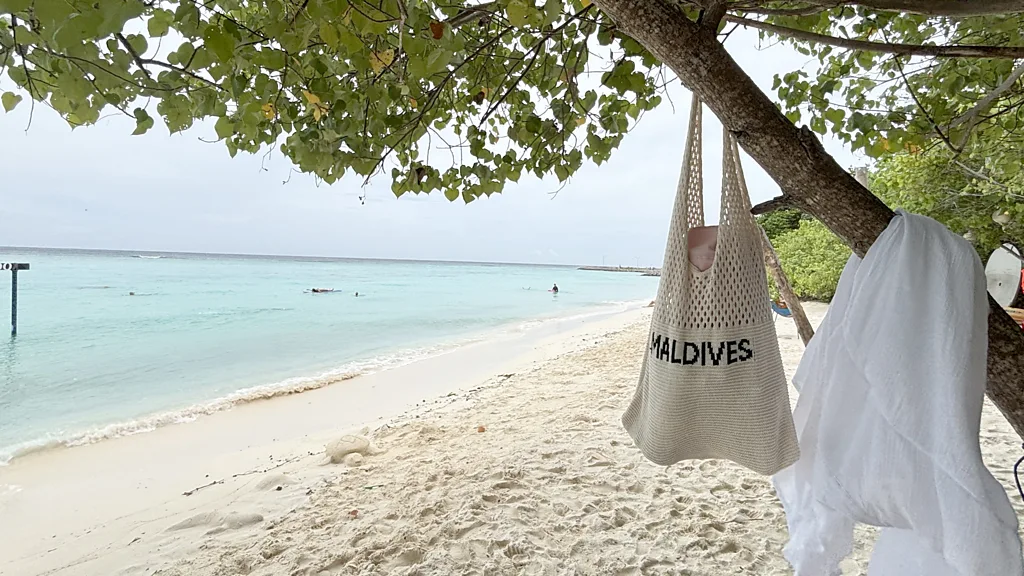
For families chasing reef adventures without the ultra-luxury price tag, Sun Siyam Olhuveli delivers. My children roamed the shores freely, spotting reef sharks and turtles just off the house reef, while I indulged in boat dives to explore Shark Point and Banana Reef, where manta rays glided like shadows and hawksbill turtles grazed on coral heads. Back on land, the six pools (including the Maldives’ longest, at 210m) provided endless space for both play and relaxation. The resort strikes a rare balance, polished yet easy-going, with the kind of warmth that comes naturally to a Maldivian-owned property.
Resorts like this are at the forefront of the Maldives’ sustainability drive. Under the Sun Siyam Cares programme, guests can join beach clean-ups, plant coral and restore lagoons. The resort’s “Recycle-Reuse” initiative turns old linens into cleaning cloths, and single-use plastics are being phased out entirely. Even my request for a plastic bag for wet swimwear was met with a smile: “We don’t use those anymore.”
The push for sustainability extends beyond individual resorts. Tourism and environmental policy now work hand in hand, with regulations aimed at cutting single-use plastics, conserving energy and protecting marine life. Under President Dr Mohamed Muizzu, the Maldives has set an ambitious target: generating 33% of its electricity from renewable sources by 2028, a vital step towards reducing the country’s carbon footprint and safeguarding the fragile ecosystems that underpin its tourism industry.
More like this:
• A new island of hope rising from the Indian Ocean
• How a fictitious ‘sea’ became a top Maldivian tourist attraction
• Are the world’s most beautiful islands in danger?
Thoriq Ibrahim, Minister of Tourism and Environment, sums up the strategy: “Our pristine environment is our foundational asset. We are not pursuing growth at the expense of our environment.”
The Maldives is evolving, and not quietly. Guesthouses and family-run stays now offer meaningful encounters with local life, while Maldivian-owned resorts are proving that comfort and conscience can coexist. For travellers once priced out of paradise, the islands now offer something far richer than exclusivity, and that’s authenticity. What was once a honeymooners’ fantasy is now a destination families can return to, not just aspire to.
—
If you liked this story, sign up for The Essential List newsletter – a handpicked selection of features, videos and can’t-miss news, delivered to your inbox twice a week.
For more Travel stories from the BBC, follow us on Facebook and Instagram.
Source:BBC


