South Korea has passed a bill banning the use of mobile phones and smart devices during class hours in schools – becoming the latest country to restrict phone use among children and teens.
The law, which comes into effect from the next school year in March 2026, is the result of a bi-partisan effort to curb smartphone addiction, as more research points to its harmful effects.
Lawmakers, parents and teachers argue that smartphone use is affecting students’ academic performance and takes away time they could have spent studying.
The ban has its sceptics, including students, who question how it would work, its wider implications and whether it is addressing the root cause of addiction.
The bill passed convincingly on Wednesday afternoon, with 115 votes in favour out of 163 members present.
Most South Korean schools have already implemented some form of a smartphone ban. And they are not the first to do so.
Some countries like Finland and France have banned phones on a smaller scale, applying the restriction only to schools for younger children. Others like Italy, the Netherlands and China have restricted phone use in all schools.
But South Korea is among the few to enshrine such a ban in law.
Children these days “just can’t seem to put their smartphones down,” says Choi Eun-young, mother of a 14-year-old in Seoul.
It’s not just children though. Nearly a quarter of the country’s 51 million people depend on their phones too much, according to a 2024 government survey. But that figure more than doubles – to 43% – for those between the ages of 10 and 19. And it has been rising over the years.
More than a third of teens also say they struggle to control the amount of time they spend scrolling through videos on social media. And parents fear that this is getting in the way of everything else they could be doing with their time.
“When they go to school, they’re supposed to study, but also build friendships and take part in various activities. Yet they’re unable to focus on those things,” says Ms Choi. “Even when they’re chatting with friends, they quickly go back to their phones, and naturally this interferes with learning as well.”
Some parents, like Kim Sun, whose two daughters are in primary school, are also worried about bullying on social media, where “kids throw around unthinkably harsh insults” at each other.
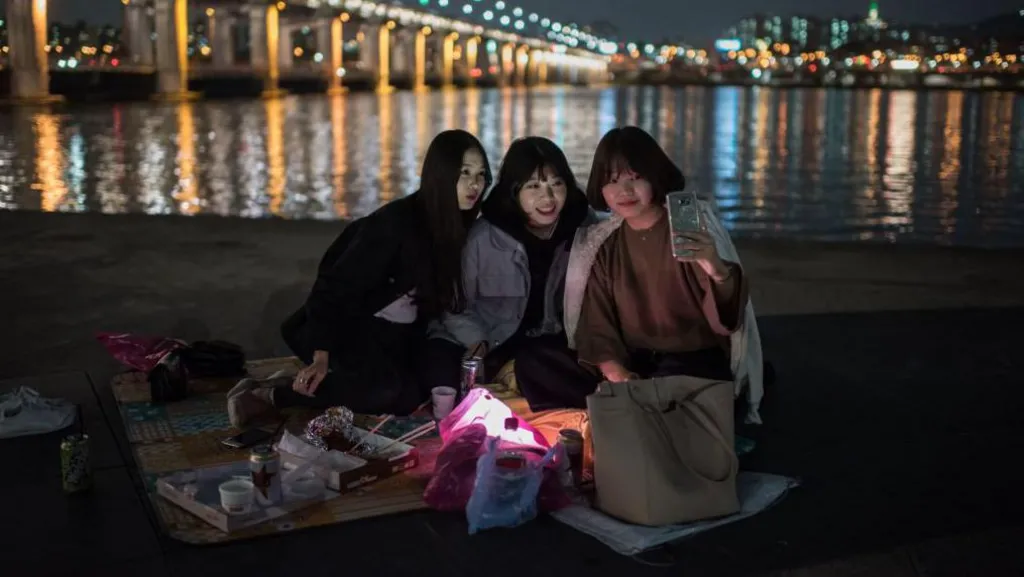
Cho Jung-hun, an MP from the opposition People Power Party who introduced the bill, says he was encouraged to act as other countries made similar moves. He says there is “significant scientific and medical proof” that smartphone addiction has “extremely harmful effects on students’ brain development and emotional growth”.
Although it only bans phone use during class hours, the law gives teachers the power to stop students from using their phones on school premises. It also asks schools to educate students about the proper use of smart devices.
There are some exemptions. The bill allows students with disabilities or special educational needs to use assistive devices, and permits use for educational purposes or during emergencies.
Teachers, however, appear to be divided over the ban. Of the two major teachers’ groups in the country, only the conservative Korean Federation of Teachers’ Association backed the bill, saying it provides “a much firmer legal basis” for restricting phones in classrooms.
A spokesperson for the group said that, according to their internal survey, nearly 70% of teachers had reported classroom disruptions because of smartphone use, with some students “unable to control their emotions in the moment [when teachers restrict phone use], swearing at or even assaulting the teachers”.
The other group, Korean Teachers and Educational Workers’ Union, said it did not have an official stand on the law – it said some members were concerned that the law violates students’ right to access their smartphones.
“In the current reality, students have no place to meet friends outside of cram schools except through KakaoTalk [a communication app] or Instagram, and they are constantly pushed into competition at school,” says Cho Young-sun, a high school teacher who believes the bill targets phones rather than the real challenge students face – the country’s notoriously competitive college entrance exam.
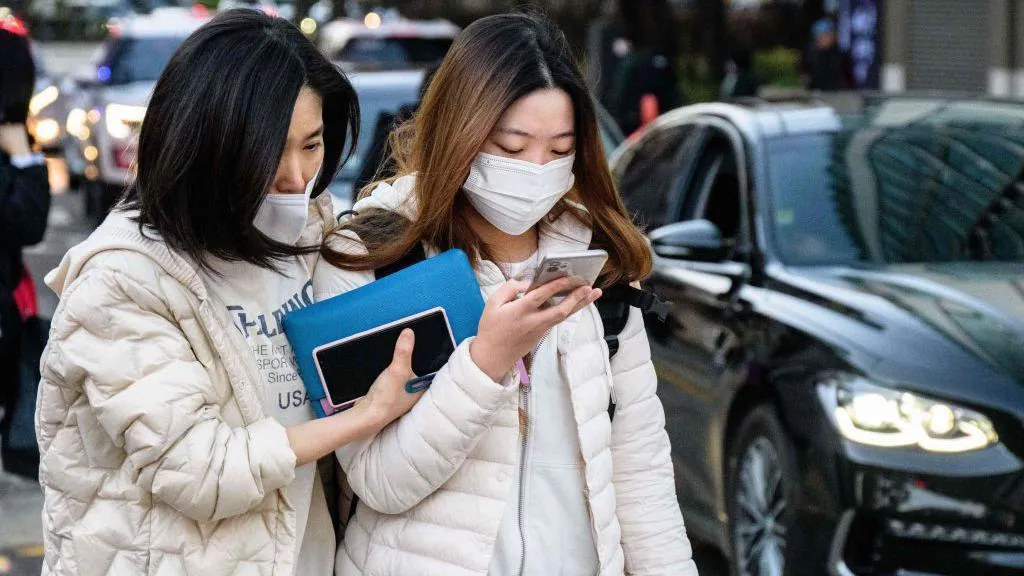
Known as Suneung, it is an eight-hour marathon of back-to-back tests that many Koreans believe seals their fate. The score plays a major role in determining whether they go to university and, if they do, which one it will be, and that, in turn, decides their job prospects and income.
Korean children begin preparing for the exam from their first day of school. A 13-year-old student, who did not want to be named, told the BBC that he simply doesn’t have time to be addicted to his phone, as private tutoring sessions and homework after school usually keep him up past midnight every day.
“Rather than simply taking phones away, I think the first step should be teaching students what they can do without them,” says Seo Min-joon, an 18 year-old high schooler who has been speaking up against the smartphone ban.
Banning the phones during class hours doesn’t achieve much, he argues, because “students would still be on their phones while commuting or lying in bed at night”.
“There has been no real education about healthy use, just confiscation.”
Source:BBC


